Monday, June 13, 2005


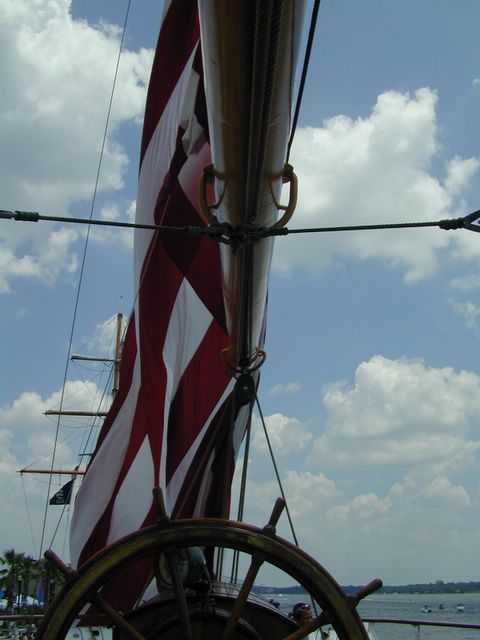
at the wheel..... Posted by Hello

Sunday, June 12, 2005

Rescue off Tonga

12/06/2005 13:11:01 Two female crew members have been plucked from a yacht caught in a storm, south of Tonga. An Airforce Orion was sent up to check on the 'Bird of Passage' after the Rescue Co-ordination Centre was advised an emergency beacon had gone off. Mission controller Neville Blakemore says the yacht had been sheltering at the North Minerva Reef, but the Orion found the yacht dragging anchor and without a mast or communications. Mr Blakemore says the sea conditions are still horrendous, with 50 knot (93 km/hr) winds and 8 metre seas. Mr Blakemore says the women have been taken onboard another yacht which is still sheltering at the reef.

Saturday, June 11, 2005

Two fishermen rescued from overturned boat

June 11, 2005 Two fishermen rescued from overturned boat FLORIDA TODAY Dr. Roger Montz, a Melbourne Beach dentist who was reported missing during a boating trip from the Bahamas on Friday, was rescued Saturday and brought to Port Canaveral by helicopter. Montz, 35, and Rob Perdigan, 35, were found clinging to the overturned hull of the 34-foot outboard-powered fishing boat at around 4:15 p.m., according to the U.S. Coast Guard after an 18-hour search. Montz and Perdigan were crossing to Fort Pierce from White Sand Ridge, Bahamas, with another boat after a 10-day fishing trip. Art Mowrey of Gainesville, captain of the second boat, reported the Extractor missing when he arrived in Fort Pierce and couldn't find Montz and Perdigan. The Coast Guard began a search of the area between Fort Pierce and the Bahamas with an HH-65 Dolphin helicopter, an HH-60 Jayhawk helicopter, an HU-25 Falcon jet, and a C-130 aircraft, as well as the Coast Guard Cutters Shrike and Marlin. One of the aircraft, using information from an electronic beacon deployed from the Extractor, spotted an overturned boat around 38 miles offshore Brevard County and called for helicopter assistance. Seas in the area were reported to be around six feet on Saturday afternoon. They were hoisted by helicopter soon after, and were taken to Coast Guard Station Port Canaveral for transfer to a Brevard hospital.

Friday, June 10, 2005


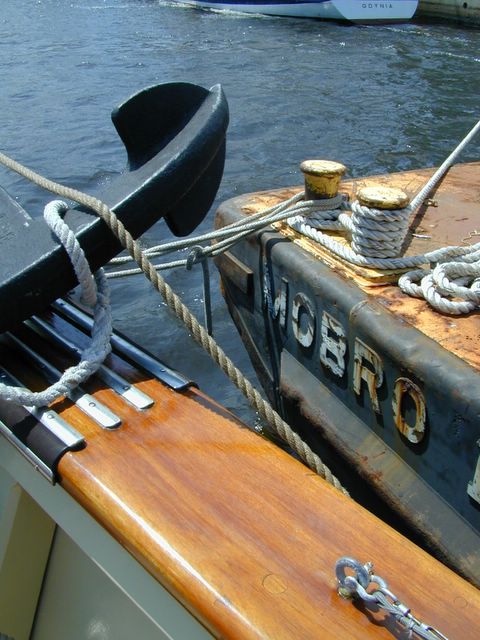
Barge and Anchor .... Posted by Hello

Safety checks now mean better boating later

Safety checks now mean better boating later By Wayne Brewer / Special to The Citizen Millions of Americans use some type of watercraft. The state reported in 2003 there were 5,817 registered boats in Cayuga County. Cayuga County is blessed with several bodies of water to enjoy boating. There can be problems, particularly on weekends and holidays, with heavy activity. According to Sergeant John Leja, who supervises the navigation unit with the Cayuga County sheriff's department, there were four boating accidents last year in the county. There are three things to remember to avoid problems: common sense, courtesy, and ethics. Because we share the waterways with others, it is important to respect each other's rights and obey the laws and basic safety principles to have a safe and enjoyable boating experience. Boat Check If you have not already done so, start with a service and safety check on your boat, motor and trailer. Don't tie up the launch for hours trying to start your engine or repair your boat. Inspect the hull for any damages. Have your motor or engine serviced. Pay particular attention to the fuel system, gas tanks, hoses and couplings and replace any that are leaking or worn. Check out the electrical system, gas fumes and electrical sparks can create some unexpected fireworks. For safety reasons, any boat with a motor should have a Coast Guard-approved fire extinguisher. The law requires all motorboats carry an anchor and enough rope to insure safe anchorage. A whistle or horn is required on every mechanically-propelled vessel. Every boat 16 feet or more needs to carry a one-foot square fluorescent orange distress flag and three handheld red flares for nighttime use. Do not forget the trailer. Examine the winch, rope and rails so your boat does not come off on the highway or roll off when you go around a bend. The trailer needs good tires and well-lubricated wheel bearings. Make sure the towing vehicle is large enough to safely pull and control the weight. Personal Flotation Devices Eighty-six percent of boating fatalities that drowned were not wearing PFDs. Over 400 lives could have been saved if PFDs were worn. All boats, including rowboats and canoes, must have Coast Guard-approved PFDs for everyone. All PFDs must be in good and serviceable condition. That means no rips or tears, missing straps or broken buckles or zippers. If you squeeze the PFD and it is rock hard, it is bad and should be discarded. Anyone towed by a boat, which includes water skiing, tubing, parasailing and inflatable devices, must wear a PFD. All children under 12 are required to wear a PFD. In 2003, drowning was the cause of death for approximately 60 percent of the children (12 and under) in boating accidents. Boats 16 feet or longer must also have a cushion, ring, or horseshoe PFD on board that is readily accessible. Move your PFDs so they are easy to reach in an emergency. Let everyone know where they are. Basic Safety Regulations Just as there are basic safety rules that apply to cars, there are ones for boats. Never overload; capsizing and falling overboard are the most reported fatal-accident cause. Also, make sure passengers and gear are situated so the boat's weight is evenly distributed. In addition, passengers should be seated in a safe location. While underway, passengers should not ride on the bow, gunwale or in any dangerous position. Riding on the bow also restricts the boat operator's visibility. Failure to keep a proper lookout is another accident cause, as is careless and reckless operation. The maximum speed limit when boating within 100 feet of shore, a dock, pier, raft, float or an anchored or moored boat is 5 mph. All vessels must reduce speed when visibility is reduced. Operating at excessive speeds is another accident contributor. Never obstruct channels or interfere with other boats' travel. Avoid anchoring in heavily-traveled areas. Tying up to a buoy or other navigation aid is illegal. All boats towing a person (skier or tuber) must have an observer on board. The observer must be at least 10. Water skiing and related activities are prohibited at night. Boater inexperience is another cause of accidents. By law, youngsters 10-18 must have a boating safety certificate before operating a mechanically-propelled boat without adult supervision. All those operating PWCs are now required to have a safety certificate regardless of age. Booze and boats do not mix; not only is it dangerous, it is illegal. According to Leja, the four boating accidents reported in Cayuga County last year resulted from operators disobeying safety requirements. Navigation Rules In 2003, the most reported type of boat accident were collisions. All boaters must be familiar with the rules of the water to avoid them. Hand-propelled boats (row boats, canoes) have the right of way over powerboats and sailboats. Sailboats generally have the right of way over powerboats. However, sailboats using a motor are considered powerboats. Motorboats should stay away from non-powered craft and should not create a wake. Cross behind a non-powered boat so your wake is not thrown over their bow, possibly swamping them. When two boats coming from different directions meet, each should slow up and alter its course to stay clear. Boats can pass on either side of one another; to the starboard (right) or the port (left) side. If you meet head on, go to the starboard to pass. It is important each boater make their intentions known ahead of time by altering course in advance and not at the last minute. When overtaking or passing, stay clear. The boat being passed has the right of way if it maintains course and speed. In situations where two boats' paths cross, the boat to the right has the right of way. All boats should stay clear of large commercial vessels and any others with restricted maneuvering. Also, bring plenty of liquids and sunscreen. You can become dehydrated in the hot sun, so drink plenty of liquids. You can develop a serious sunburn, so use sunscreen and wear sunglasses. Th e Cayuga County sheriff's department will be condutcing boating safety courses on Saturday and Sunday. For more information, contact the department at 253-3935. http://www.auburnpub.com/articles/2005/06/10/sports/sports03.txt

Thursday, June 09, 2005

Carbon monoxide a silent, invisible threat when boating

Carbon monoxide a silent, invisible threat when boating By JIM DARNELL - Local Outdoors Columnist Posted: Thursday, Jun 09, 2005 - 04:13:09 pm CDT Visiting my daughter and her family on Lake Travis Memorial Day Weekend was a real eye-opener. Recreational boating and personal watercraft traffic was unbelievable. It was a war zone. High-speed jet skis were following ski boats jumping the boat wakes. A fallen skier looked like a downed fighter pilot in enemy infested waters. The occasional fisherman didn't have a chance unless he likes surfing wakes while trying to cast to the banks. Besides all the well-known ways to get in harms way on the water, such as alcohol and boats, no life jacket, bad weather, there is a silent invisible threat - carbon monoxide. On that same weekend game wardens were patrolling the Devils Cove on Lake Travis when they responded to an emergency medical call of a female not breathing on board a vessel. The 18-year old had been overcome with carbon monoxide from the back of a vessel, according to medical personnel. She had fallen off the back of the boat from the deck without a life jacket on, unconscious. Fortunately, other boat occupants pulled her out of the water. She responded to oxygen and was taken to the hospital. "People want to sit back there and drink and hang out," said Texas Parks and Wildlife Department Game Warden Robert Goodrich. "But those fumes are boiling up back there and it's unsafe to be back there with the engine idling." "This young lady was lucky, she ended up okay, but she did not have a life jacket," said Goodrich. "This very well could have been a fatality." Carbon monoxide is odorless and when enough is inhaled, without the victim realizing it, death comes. A few years ago, on a private ski lake in Ellis County, a teenage girl who was lying on the back deck of a ski boat was overcome with carbon monoxide and died. Since 1990, carbon monoxide has killed at least 93 people while boating and sickened nearly 400 others. A new water craze is contributing to this carbon monoxide threat. It's called teak surfing. While standing on my son-in-law Bill Paschall's dock, I watched several people surfing the wake right behind the boats. It looked fun and easy. The swimmer just held onto the back of the boat until the boat's wake was like a beach wave. Then they turned loose and let the surfboard ride the curl like they were on some exotic South Sea vacation island. The boat moved along slowly at the same speed as the surfer. The problem is the engine exhaust. The surfer is right behind the boat transom and breathing in the fumes, some of which are the silent killer-carbon monoxide. Because the swim platform on most ski boats is made of teakwood the activity is called teak surfing. My daughter, son-in-law and their friends teak surf regularly. Bill is very aware of the dangers. "We don't let one person surf very long and we always make sure there's a breeze blowing to help disperse the fumes," he said. He also told me that due to the popularity of teak surfing one of the major builders of ski boats, Ski Centurion, is directing the exhaust out of the side of the boat in it's newest models. Another danger that occurs from the invisible gas is when several boats moor closer together for partying. If one or more of the boats has the engine idling, carbon monoxide builds up because of no air currants to carry it away. The frolicking water enthusiasts have no idea that they are breathing deadly fumes. Texas Parks and Wildlife personnel have a simple suggestion to solve the problem: Don't let passengers teak surf, and keep passengers off the swim platform when the engine or generator is running. Simple. But will boaters heed it. Of course not! It's like exhorting young people about safe sex or the dangers of drugs. It has about as much effect as spitting into the wind. Even though the carbon monoxide threat is real, it pales into significance compared to the most deadly water peril - boating while intoxicated (BWI). Over half of the 209 boating accidents last year involved alcohol. Arrests in Texas for BWI were up from 193 in 2003 to 279 in 2004. A reminder: a law that took effect in 2001 includes suspension of an automobile driver's license for failing to submit to alcohol testing when suspected of operating a vessel while intoxicated. This applies to watercrafts of 50 horsepower or more. There's a long hot summer ahead and taking to the water is one of the best ways to combat the heat. But let's be safe. "Texas is different from many other states in that we have a year-round boating season. We also have more inland water than any of the 48 continental states. We have a coastline and all the activity there as well. We also have one of the highest number of registered boats in the nation. We just have a lot of activity. With all this in mind, we feel like overall, boating is a safe activity in Texas, but boaters should learn and follow basic safety tips," said Willie Gonzales, assistant chief of marine enforcement at TPWD. Jim Darnell is an ordained minister and host and producer of the syndicated outdoors show 'God's Great Outdoors'. http://www.sanmarcosrecord.com/articles/2005/06/09/sports/sports3.txt

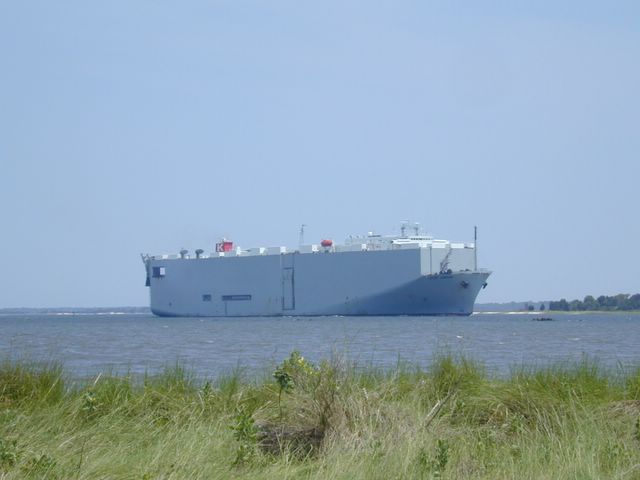
Car Carrier.... Posted by Hello

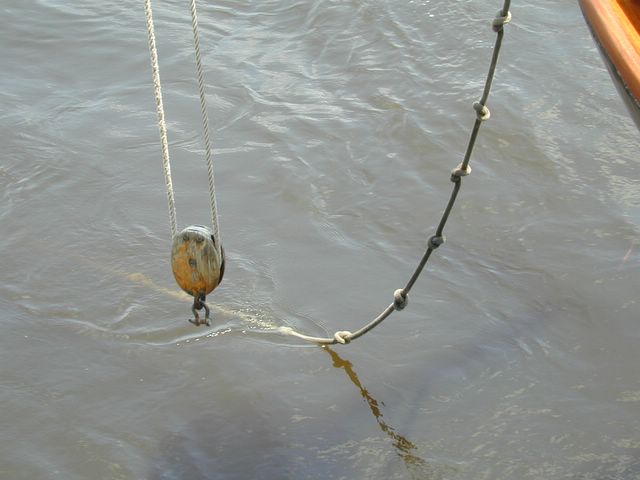
knots.... Posted by Hello

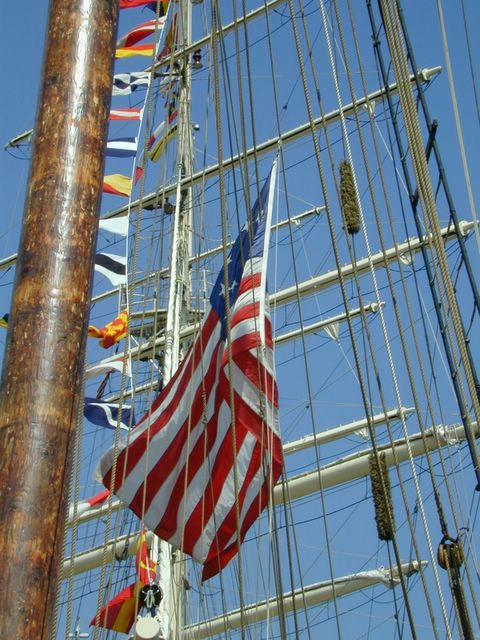
Rigging aloft  Posted by Hello

10 Dumb Boating Mistakes You Don't Want to Make

10 Dumb Boating Mistakes You Don't Want to Make By Chris Caswell Tell us about your dumb boating mistakes It could have been a scene from "Dumb and Dumber." The husband, an experienced skipper, told his wife to entertain their guests aboard their 35-footer while he released the dock lines for a harbor cruise. He'd handled the lines many times by himself, and he noted that there was no wind to make it difficult. From the dock, he tossed the bow line aboard and walked aft to the stern line, which also went onto the boat. What he hadn't noticed was the strong current sweeping under the dock and pushing the boat away from it. The moment the stern line was released, the boat was too far away for the skipper to get back aboard. "Honey," he called, now a little worried. "Toss me a line." That tone must have rattled her, because she picked up a spare line and threw it, unattached, to where he stood stranded on the dock. Don't be surprised by this incident. The truth is, something like it happens every weekend in some marina across the country. Is it the worst kind of mistake a boater can make? That's tough to say. Trying to fathom the depth of boating dumb isn't a task for wimps, mostly because no one goes unscathed. All skippers screw up, but some mistakes are worse than others. Here's a look at 10 that rank high on my list. Many of us have made the same mistakes, and a few of us, ahem, have made them more than once. 1. The Dreaded Drain Plug. No, a drain plug doesn't fall out or unscrew itself; sometimes, you just forget to put it in. Whether you're maneuvering a trailerable boat down a launch ramp or sliding an inflatable dinghy over the stern of your cruiser, it needs a drain plug. The penalty for overlooking this simple chore can be anything from soaked pants to a sunken boat. 2. Cast Off…Everything. One former boating magazine executive (I've been sworn to secrecy) backed his yacht out of the slip after casting off everything except for the shore power cord. As several tons of yacht tugged on the cord, it stretched a bit until it finally tore out of the socket in a brilliant fireworks display and a cloud of smoke. Forgetting to unplug the shore power cord was a particularly spectacular oversight on the part of this skipper, but forgetting to untie a dock line can be just as stupid, especially if you rip the cleat out of the dock or the boat. 3. Don't Be Fuelish. When the know-it-all skipper grabbed the fuel hose away from the teenager manning the fuel dock, the kid didn't see any reason to tell the jerk that he was pumping oily diesel fuel directly into his water tank. On too many boats, the fuel and water fills look alike. Of course, there is that little label that says "Fuel" or "Water" but, hey, who really looks? Believe me, you will after you've spent a small fortune having your water tank steam-cleaned to get that dreadful taste out of the drinking water. Or, alternatively, after you've had the engine rebuilt because you filled the fuel tank with water. One amusing variation of this dumb boating mistake is the skipper of the sportfishing boat who pumps gas into the rod holder. 4. The Classic Prop Knot. This seamanship error is depressingly similar to mistake number two, but it occurs when your crew doesn't tidy up all the dock lines immediately. Murphy's Law states that the dock line that falls into the water will be exactly 10 feet longer than necessary to reach the propeller. The result is that 10 feet of thick and stretchy nylon will wrap tightly around at least one prop. What happens next isn't pretty. If it was a stern line, it could yank the entire prop and shaft out of the hull, leaving a solid stream of water shooting into the boat. If it was a bow line, the bowthruster could suck it up faster than an Italian can inhale spaghetti. A wrapped bow line won't keep the boat from moving the way a knot at the stern could, but it's 10 times harder to get free. 5. No Spark. Here's more proof that novices are not the only ones who make dumb mistakes. Three boat testers from another magazine just couldn't get the sportboat engines to crank. These were knowledgeable guys, so they tinkered with the battery switches, pulled the cables off the batteries and cleaned them, checked the engine electrics and then scratched their heads. That's when one guy noticed that the kill switch lanyard, designed to protect fools from themselves, was dangling from the belt of one tester. Fortunately, they'd only wasted about three hours. 6. The Leap of Faith. It was going to be a tough docking situation, with wind and current and surrounding boats complicating things. The skipper told his mate to jump ashore as soon as possible to get a line on a cleat. She did exactly as she was told, launching herself like a gazelle when the boat was about eight feet from the dock. The problem was that she was holding five feet of dock line tightly in her hand. When she reached the end of the line (literally), she stopped cartoon-like in midair and dropped straight into the water, which complicated things even more. 7. Captain Crunch. Most boaters would agree that this mistake is seriously dumb. When approaching a dock, most of us know to keep our hands and feet out of the way. Even if you're in a 20-foot runabout, putting your hands out to fend off the dock is just asking for trouble. Imagine for a moment what happens if you get your little pinky between a two-ton boat and an immovable dock: It isn't pretty. Fenders and rubrails are designed to handle the bumps from docking, not fingers or toes or ankles. Always remember to tell your guests to keep their hands in their pockets. 8. Let Go the Anchor. It's amazing how fast the anchor rode can run out, whether the water is simply too deep or your boat is backing up too quickly. The very end of a line is called the bitter end, and you'll quickly understand that name if you forget to secure it to your boat. Many harbors have more anchors on the bottom than a marine hardware store, and all because many skippers forgot to put knots in the end of their lines. Learn from the mistakes of others: Don't donate your anchor to King Neptune. 9. How High I Am. Always know the range of the tide wherever you cruise. More than one skipper has tied alongside a pier and gone ashore for a leisurely dinner, only to return to find his boat dangling sideways from the dock lines after the tide went out. The farther north you venture, the more range between high and low tides. Plan ahead for tidal changes, or you'll literally find yourself hanging around. 10. How Low Can I Go? When you anchor in an unfamiliar harbor, check the depthsounder, check the chart and remember the tides. More than a few skippers have been awakened in the wee hours when they fell from the bunk as the boat, solidly aground at low tide, tipped far over on one side. It's a good way to bend a propeller, and it's pretty embarrassing at sunrise when everyone sees your predicament. Those are all the dumb mistakes I have room for here, but believe me, there are many more stories to be told, including the one about the skipper who didn't know his new boat had a holding tank. He just kept flushing and pumping and flushing and pumping until something deep in the bilge went kaboom. There's also the story about the fisherman who tossed his steel knife up on the dash next to the compass—the magnetic compass—as he headed home through the fog. I'll save those other mistakes for another time. But if you have a story about one of your own mishaps that you'd like to share, log on to www.motorboating.com/mistakes and tell us about it. Chances are we've felt your pain. And in the end, confession is good for the soul. http://www.motorboating.com/motorboat/features/article/0,12696,1069344,00.html

Wednesday, June 08, 2005


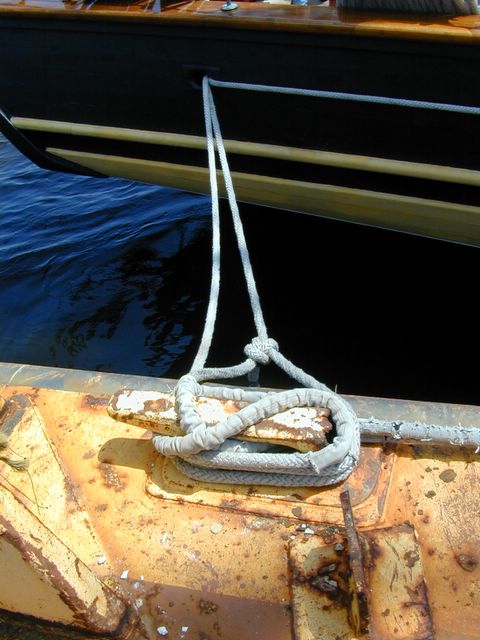
Cleat and line..... Posted by Hello

Old Glory....!! Posted by Hello

Tuesday, June 07, 2005

Personal Watercraft Hazards

Personal water hazards Crowded waterways, top speeds and inexperienced riders can turn summertime fun into tragedy. By SUSAN ASCHOFF, Times Staff Writer Published June 7, 2005 The generic name for Jet Skis and WaveRunners and Sea-Doos - those zippy vessels that are to water as motorcycles are to dirt trails - is personal watercraft, or PWC. They're not necessarily more dangerous to operate than a speedboat, but Tampa Bay's crowded waterways increase the risk. Pinellas County is No. 1 in Florida for PWC accidents. Two weeks ago, two people died when a Sea-Doo and powerboat collided in Boca Ciega Bay near John's Pass. Another man was seriously injured a week later when two WaveRunners collided off Dunedin Causeway. Last July, a father and his 8-year-old daughter died after their Jet Ski and a pontoon boat collided on the Homosassa River in Citrus County. "It's the high concentration of watercraft. We call the south end of Courtney Campbell Parkway "Jet Ski beach,' " says Lt. Roger Young. He has worked on accident investigations for a decade with the Tampa office of the Florida Fish and Wildlife Conservation Commission. Inexperience with how PWCs operate can prove lethal. "You have a party," Young says, "and everybody wants to ride." When a driver cuts power to slow down - there are no brakes - he or she loses steering. And because PWCs are fast, reaching speeds up to 70 mph, drivers tend to have "tunnel vision," says Young, unaware of other craft to the side or rear. With summer in full swing and tourists en route, here are some 2004 boating statistics to consider before launching in 2005: - Florida ranks No. 1 in the United States in number of boat, PWC and other vessel fatalities. - Pinellas County is No. 1 in Florida, with seven. - Pinellas County is No. 1 for PWC accidents, 26, with one fatality. - When combined, Pinellas, Monroe, Okaloosa, Orange and Miami-Dade counties account for half of all PWC accidents in the state. - In Florida, PWCs make up 11 percent of registered vessels but are involved in 37 percent of reported accidents. - Rental PWCs were involved in 43 percent of PWC accidents though they constitute only 2 to 3 percent of all registered PWCs. Constant use is mostly to blame. - Palm Beach County reported the highest property losses at $8,693,289, but that figure includes an $8-million yacht destroyed by fire. The next highest was Miami-Dade at $1,195,375. - 982,907 commercial and recreational vessels are registered in Florida, a new record. And one in 10 is a PWC. - The most likely person to be operating a vessel involved in an accident in Florida is a male between ages 22 and 50 who has 100 hours or more of experience but no formal instruction. - The most likely time to be involved in a boating accident is between noon and 6 p.m. - The most likely months for an accident are March, April, May, June and July. - The most likely boating activity when the accident occurs is cruising. - Almost 21/2 times as many people die from falling overboard than from capsizing or collision. - The leading cause of death in fatal boating accidents is drowning, yet three-fourths of the people who died reportedly could swim. - Fewer than one-fourth of those in boating accidents were wearing life jackets. - Arrests for boating under the influence were up 17 percent over 2003. -- SOURCE: All figures are from 2004, the most recent full year available, and from the Florida Fish and Wildlife Conservation Commission, www.myfwc.com [Last modified June 6, 2005, 13:43:04] http://www.sptimes.com/2005/06/07/Floridian/Personal_water_hazards.shtml

Monday, June 06, 2005


Working or fishing? Posted by Hello

Sunday, June 05, 2005

Fishing can teach us to be better parents

Fishing can teach us to be better parents COMMENTARY By LOUIE STOUT Jim Bollinger doesn't need the Recreational Boating and Fishing Foundation (RBFF) to remind him how important fishing is to kids. His eight-year-old son Joshua made that clear a few weeks ago. Jim is a veteran South Bend car salesman and an avid angler. And if you know anything about the car business, you work on commission and have to budget for the peaks and valleys. And for the Bollingers, this has been a deep valley. A budget adjustment was in order. "Eileen and I put Josh to bed one night and sat down to discuss how we could cut expenses," Bollinger recalled. "It became apparent that we needed to sell the boat, eliminate a payment and put more cash back into the family." The decision was made. He'd hang a "for sale" sign on the fishing rig the next day. "As we headed for bed, I heard Joshua crying," said Bollinger. "I walked into his bedroom and saw him sobbing in his pillow." Dad sat on the edge of the bed and asked the youngster what was wrong. "I heard you talking to mom about selling the boat," sobbed the youngster. "I love that boat, dad, and when you bought it, you said that you and I could fish forever. Now we can't." That ended plans to sell the boat. Budget cuts would be made elsewhere. "Every once in awhile, God gives us a slap in the face and this one registered loud and clear," said Bollinger. "I didn't realize that fishing was that important to him, but I do now." The Recreational Boating and Fishing Foundation wants other adults to get the message. National Fishing and Boating Week kicked off Saturday and runs through June 12. "It's time to get Americans back to fishing, especially our youth," said RBFF spokesman Gary Dollahon. "Kids need to get off the couch, away from the X-Box and logged out of the chat rooms." He's right. A U.S. Fish and Wildlife Survey shows a 4 percent decline in fishing participants. Fewer anglers mean fewer dollars for boat ramps, stocking programs and fish management activities. And if you look around the lakes, you don't see as many kids fishing as you once did. That's sad. "Most people learn to fish from a parent or grandparent, but many kids are missing out on that today," said Dollahon. Fishing isn't always about the catching, he added. Two thirds of anglers surveyed by the RBFF said a key reason they enjoy fishing is it gives the family an opportunity to connect. I can vouch for that. Like Joshua, my son Jason delivered me a thoughtful message during our first ice fishing outing 25 years ago. We plodded through 100 yards of knee-deep snow to reach a pond filled with bluegill. Jason, who is mildly handicapped, insisted on carrying a bucket filled with rods while I lugged other gear. He frequently tumbled face down into snow -- spilling the bucket of its contents -- only to come up laughing each time. I failed to see the humor in that or the dozens of line tangles that he managed to create the rest of the afternoon. There was no time for me to fish, as a school of four-inch bluegills bit Jason's wax worm every time I managed to unravel his line and dunk it back into the hole. "Boy, dad, you better get busy fishing," Jason chided. "I've got 10 and you don't have any!" As darkness approached, we gathered our gear and headed for the car. My patience was worn to the bone by his endless questions and mishaps. My temper flared more than once. As we climbed the snowy hill, we stopped to catch our breath. As I squatted against a tree, Jason snuggled against me and threw his arm around my neck. "Thanks for taking me today and showing me everything I need to know about ice fishing," he beamed. "Cause now, when I become a dad, I can teach my son everything he needs to know about fishing." It was then that I realized this trip wasn't about me teaching him to fish. It was about me learning to be a father. Take a kid fishing this week and you may learn something, too.